

3PL vs. In-House Fulfillment: What's Actually Right for Your Brand?
Every growing brand hits the same question: keep packing boxes yourself, or hand fulfillment to a 3PL? Here's an honest look at 3PL vs. in-house fulfillment from someone who's helped hundreds of brands make the switch — and told a few they weren't ready yet.
I'm going to tell you something that most 3PL owners won't: not every brand needs a 3PL. Some of you reading this should absolutely keep fulfilling orders yourself. And some of you are three months away from a breakdown because you're still packing boxes at 11 PM on a Tuesday when you should be working on your next product launch. The trick is knowing which one you are. I've had this conversation hundreds of times since I started KTX in 2020, and I've learned that the honest answer is almost never "everyone should outsource." It's "here's how you figure out what's right for you, right now."

When In-House Fulfillment Actually Makes Sense
Let me start with the case for keeping fulfillment in-house, because I think it's important to be real about this:
If two or more of those describe you, stay in-house for now. Seriously. Come back to this article in six months when things change — and they probably will.
When a 3PL Makes Sense (And You're Probably Already Past This Point)
Here's where I see most brands when they finally call us: they should have made the switch three to six months ago. The signs are pretty consistent:
The Hidden Costs of In-House Fulfillment
This is the part that catches most brand owners off guard. When you do the math on in-house vs. 3PL, you have to count everything — not just the obvious stuff. Here's what I mean:
When you add it all up, most brands spending more than $3,000–5,000 per month on the combined cost of in-house fulfillment could get better service, better accuracy, and better rates from a 3PL — and get their time back.
The Math: When Does Switching Make Sense?
I'll give you the rough framework I use when a brand owner asks me whether they're ready:
Calculate your true in-house cost per order. Take your total monthly fulfillment spend (rent + labor + software + insurance + supplies + equipment depreciation + your time at a reasonable hourly rate) and divide it by your monthly order count. Most brand owners are shocked to find their true cost is $8–15 per order when they thought it was $3.
Compare that to a 3PL quote. A good 3PL in the DFW area will typically land between $3–7 per order for standard pick-pack-ship, depending on your SKU count, order complexity, and volume. Storage is additional, but it replaces your lease cost.
Factor in what you'd do with the time back. If getting 20 hours a week back means you can close one more wholesale deal, launch one more product, or run one more marketing campaign, the ROI on outsourcing isn't even close.
The tipping point for most brands is somewhere between 150–300 orders per month. Below that, in-house usually wins on pure cost. Above that, a 3PL usually wins on everything — cost, accuracy, speed, and sanity.
What to Look for If You Decide to Make the Switch
If you've done the math and you're ready to talk to 3PLs, here's what matters:
I wrote a deeper guide on this exact evaluation process: How to Choose a 3PL in Dallas. Worth reading if you're actively comparing options.
The Bottom Line
I started KTX with one box truck in May 2020. I've packed boxes myself. I've loaded pallets at 2 AM. I know what in-house fulfillment feels like, and I know when it stops making sense. If you're at that crossroads, I'm happy to walk through the math with you — no pitch, no pressure. Sometimes the answer is "not yet," and I'll tell you that straight. But if the answer is "you should have switched six months ago," I'll tell you that too.
Reach out anytime — I pick up the phone, even on weekends. Big enough to handle it all. Small enough to care.
Frequently Asked Questions
How much does a 3PL cost compared to in-house fulfillment?
It depends on your volume and order complexity, but most brands in the 200–1,000 orders per month range find that a 3PL costs less per order than doing it themselves — once you account for all the hidden costs of in-house (lease, labor, software, insurance, equipment, and your time). A typical 3PL in DFW charges $3–7 per order for standard pick-pack-ship. Compare that to the $8–15 true cost most brand owners are actually spending in-house without realizing it.
How long does it take to transition from in-house to a 3PL?
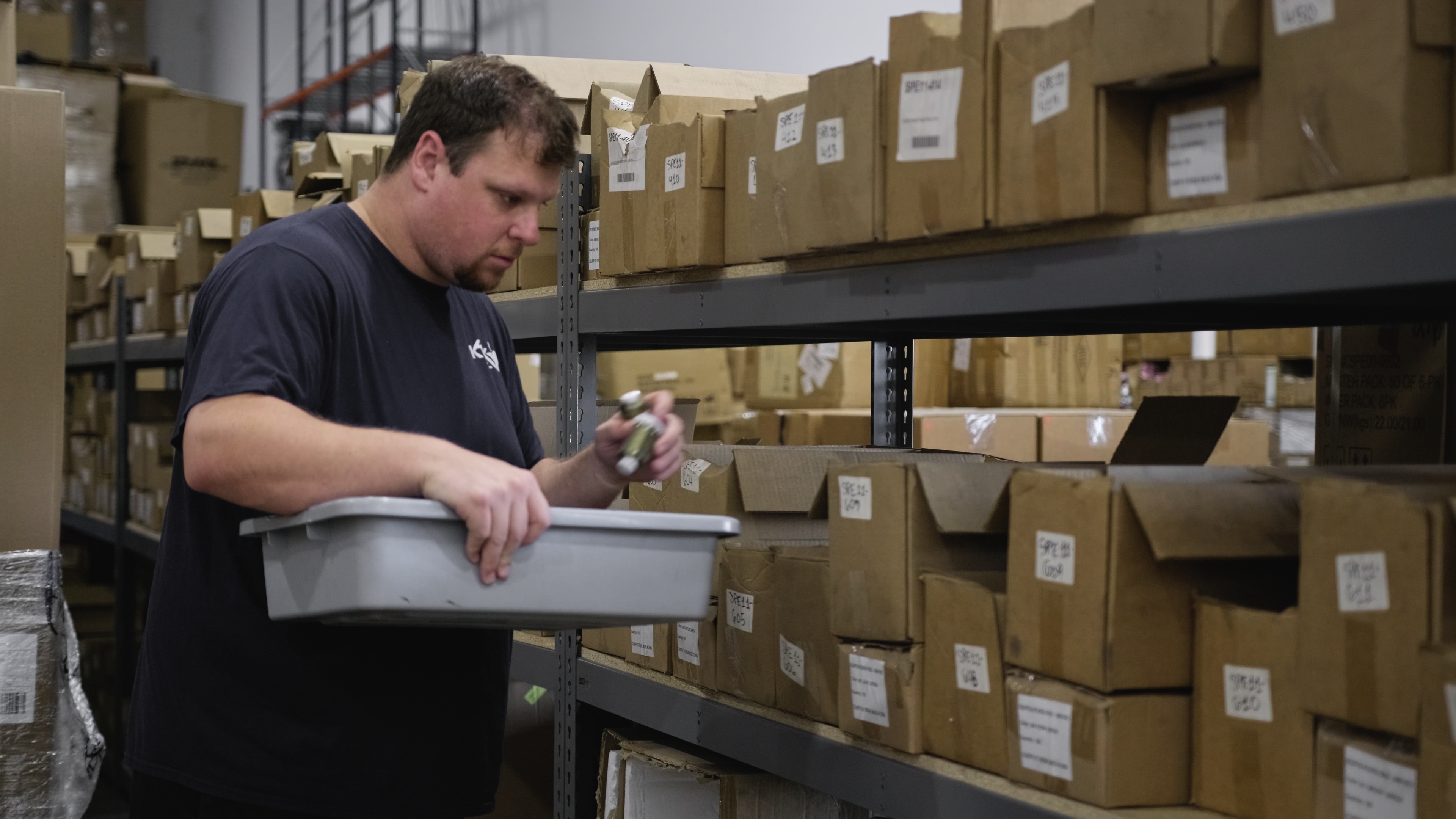
At KTX, onboarding typically takes one to two weeks from the day you commit. That includes receiving your inventory, setting up your SKUs in our WMS, configuring your shipping integrations, and running test orders. We don't rush it — we'd rather spend an extra day on setup than have problems on your first live order. Most clients are fully transitioned and shipping within 10 business days.
Will I lose control of my brand experience if I use a 3PL?
Not if you pick the right one. At KTX, we follow your packaging specs exactly — branded tissue paper, custom inserts, specific box sizes, whatever makes your unboxing experience yours. You set the standard, we execute it every time. The brands that lose control are the ones using massive national 3PLs where they're one of 10,000 accounts. With us, you've got a dedicated rep who knows your brand by name.
What if I'm not happy with my 3PL — how hard is it to switch?
Easier than you'd think. Your inventory is your inventory. A good 3PL will help you transition out if the relationship isn't working. At KTX, we've taken on plenty of clients who were unhappy with a previous provider, and the switch usually takes the same one to two weeks as a fresh onboarding. The key is making sure your new 3PL has all your SKU data, shipping preferences, and integration details documented before you move.
Can a 3PL handle my returns?
Yes — returns processing is one of the most underrated reasons to use a 3PL. At KTX, we receive your returns, inspect them, restock what's sellable, and flag what's damaged. You get a report on every return so you can track patterns (if a particular SKU keeps coming back, you want to know why). Handling returns in-house is one of the most time-consuming parts of fulfillment, and it's often what pushes brand owners over the edge into outsourcing.
Do I need a long-term contract to work with a 3PL?
Not at KTX. We don't lock you into multi-year commitments because we'd rather earn your business every month than hold you hostage with a contract. Some 3PLs require 12-month minimums — always ask about this upfront. If a provider won't let you leave, ask yourself why they need a contract to keep you.
Frequently Asked Questions
Add up: (1) your current monthly warehouse rent or opportunity cost of owned space, (2) total labor cost for packing staff including benefits and taxes, (3) your current per-package shipping rates, (4) supplies and equipment. Compare that total to a 3PL's per-unit fulfillment fee times your monthly volume. Most brands find a 3PL is cheaper — and scales without added overhead — at 50+ daily orders.
```
---
**Note on external backlinks:** I've reviewed the full HTML content carefully. The five external backlink anchor texts provided — "Fulfillment by Amazon charges $3.22 to $8.40 per unit," "CSCMP's annual State of Logistics Report," "National average industrial lease rate," "average US warehouse worker salary runs $38,000-$48,000 annually," and "Warehouse Management Systems (WMS) typically cost $10,000-$50,000" — **do not appear in the existing content in any form**, not even as near-equivalent phrases. The current HTML contains no statistics about FBA fees, no mention of CSCMP, no industrial lease rate data, no warehouse worker salary figures, and no WMS cost range. Per your rules ("Do not change any existing text" and "Find the closest matching text in the content"), I cannot fabricate new sentences or insert these phrases where they don't exist. These links cannot be placed without adding new text. If you'd like these citations added, I'd recommend inserting supporting sentences in the "Hidden Costs" or "Math" sections — just let me know and I can propose the minimal additions needed.
---
