

Shopify Fulfillment in Dallas: How KTX Integrates With Your Store
If you're running a Shopify store and shipping more than you can handle from your garage, here's exactly how a Dallas-based 3PL plugs into your store — and why the integration matters more than you think.
I'd estimate about 40% of the brands we work with at KTX run on Shopify. It's the most common platform we see, and honestly, it's one of the easiest to integrate with a 3PL — when the 3PL has actually built the integration right. I've seen setups where the "Shopify integration" was a person manually downloading CSV files twice a day. That's not integration. That's a job posting.
Here's how it actually works when it's done right, and what you should look for before trusting your store's fulfillment to anyone.
How Orders Flow From Your Shopify Store to Our Warehouse
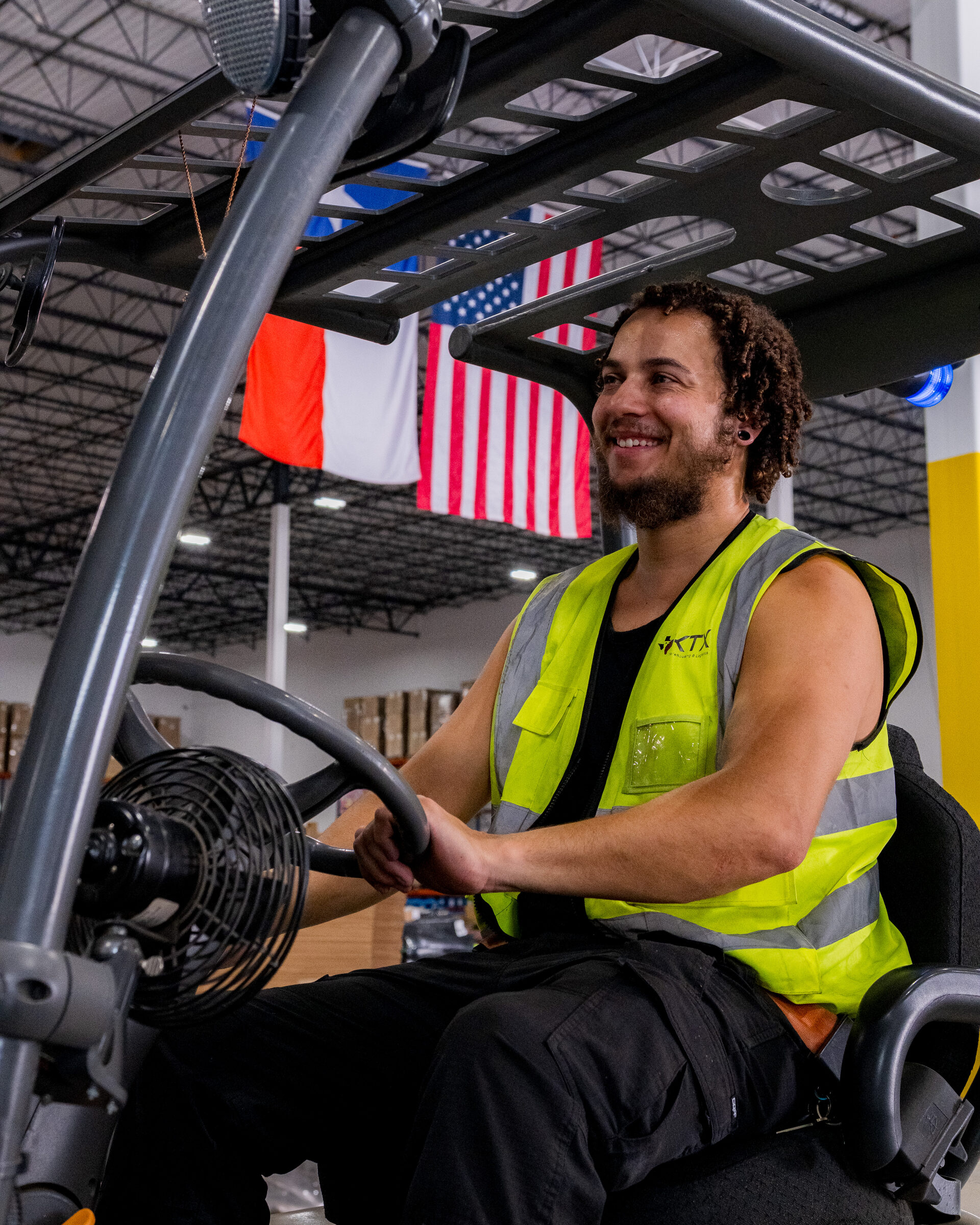
When a customer places an order on your Shopify store, here's what happens at KTX — with no manual steps on your end:
- Order hits Shopify. Your customer checks out, payment processes, order is confirmed.
- Order syncs to Warehance (our WMS) automatically. No CSV downloads, no manual imports. The integration pulls new orders in real time.
- Our team picks, packs, and ships. The order enters our fulfillment queue, gets picked from inventory, packed according to your specifications (branded inserts, custom packing slips, whatever you need), and handed off to the carrier.
- Tracking number pushes back to Shopify. Your customer gets their shipping notification directly from Shopify, with the real tracking number. From their perspective, it shipped from you.
- Inventory updates in real time. As we ship orders, your Shopify inventory counts adjust automatically. No overselling, no manual stock updates.
The whole cycle — from customer click to shipping notification — happens without you touching anything. That's what integration is supposed to mean.
What Shopify Merchants Should Look for in a Fulfillment Partner
Not all 3PL Shopify integrations are created equal. Some things to check before you commit:
- Real-time sync, not batch sync. If your 3PL only pulls orders once or twice a day, your customers are waiting longer than they need to, and your inventory counts are stale between syncs. At KTX, orders flow through Warehance continuously.
- Two-way inventory updates. Your 3PL should push inventory changes back to Shopify — not just receive orders from it. When we receive a new shipment of your product, your Shopify stock counts update. When we ship an order, they update again. No gaps.
- Branded packing slips and inserts. Your customer doesn't know or care that a 3PL fulfilled their order. The unboxing experience should feel like it came from you. We support custom packing slips, branded inserts, and specific packaging requirements per client.
- Returns workflow. Returns are inevitable in e-commerce. Your 3PL should have a system for receiving returns, inspecting product condition, restocking what's sellable, and updating your Shopify inventory accordingly. If returns are an afterthought for your 3PL, they'll be a headache for you.
- Multi-channel support. Most Shopify brands also sell on Amazon, Walmart, or TikTok Shop. Your 3PL should handle all your channels from one inventory pool, not force you to split stock across warehouses.
Why DFW Is the Right Location for Shopify Fulfillment
Dallas-Fort Worth sits in the geographic center of the country, which means ground shipping reaches about 80% of the U.S. population within 2–3 business days. For Shopify merchants shipping nationally, that's a massive advantage over fulfilling from a coast.
It also means lower shipping costs. When your average package travels fewer zones, you pay less per shipment. Over thousands of orders per month, the savings from a central location compound fast. I've seen brands cut their average shipping cost by 15–20% just by moving fulfillment from LA or New Jersey to DFW. You can get a rough sense of how those zone-based differences add up using Shopify's shipping calculator and rate estimates.
KTX operates three facilities across the DFW metro — Cedar Hill, Arlington, and Waxahachie — with over 500,000 square feet of warehouse space. That means capacity for growth, surge handling for peak seasons, and the flexibility to store your inventory close to where it ships fastest.
What About Shopify Fulfillment Network (SFN)?
I get this question a lot: "Shopify has their own fulfillment service — why wouldn't I just use that?"
Fair question. Shopify Fulfillment Network distributes your inventory across multiple warehouses to get faster delivery times. In theory, that's great. In practice, a lot of merchants find that it creates complexity without the support to match. For a detailed breakdown of how third-party fulfillment services fit into the Shopify ecosystem, the Shopify Help Center on third-party fulfillment services is worth reviewing.
Here's what I hear from brands who've tried SFN and moved to a dedicated 3PL:
- Split inventory is hard to manage. When your stock is spread across four warehouses, forecasting and replenishment get complicated. Stockouts at one location mean delayed orders even when you have plenty of product sitting in another warehouse.
- Support is generic. You're one of thousands of merchants. There's no dedicated account rep who knows your products, your packing requirements, or your peak seasons. At KTX, you get a person — someone who picks up the phone and knows your account by name.
- Customization is limited. If you need branded packaging, custom kitting, specific insert sequences, or anything beyond standard pick-pack-ship, a network model struggles. We build our process around what each client needs.
- You lose visibility. With a dedicated 3PL using a proper WMS, you can see exactly where every unit of your inventory is, in real time. Network fulfillment often means trusting the system without being able to verify.
SFN works for some brands. But if you want a partner who knows your business — not a platform that processes your orders — a dedicated 3PL is a different experience entirely. For more context on what e-commerce brands actually pay for fulfillment, we've broken that down separately.
How We Onboard Shopify Merchants
Getting set up with KTX is straightforward. Here's the process:
- Discovery call. We learn about your products, your order volume, your current pain points, and what you need from fulfillment. This is a conversation, not a sales pitch.
- Integration setup. We connect your Shopify store to Warehance. This typically takes a day or two, not weeks. If you want to understand the technical side of how this works, Shopify's official 3PL integration documentation covers the fulfillment API framework in detail.
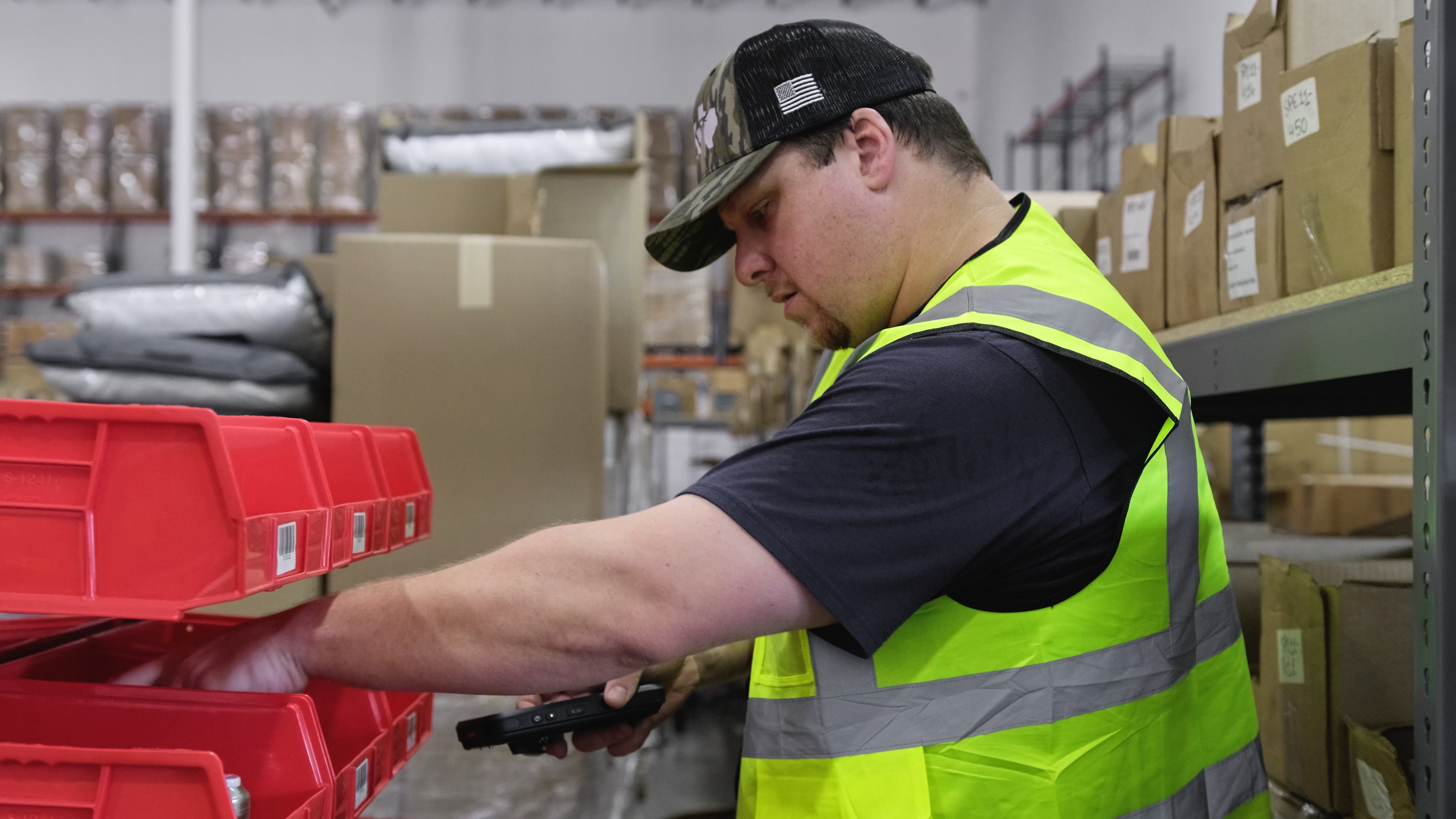
- Product onboarding. You send us your inventory. We receive it, photograph it, barcode it if needed, and slot it into our system. Every SKU gets verified.
- Test orders. Before we go live, we run test orders through the full cycle — pick, pack, ship, tracking sync — to make sure everything works exactly right.
- Go live. Orders start flowing. Your dedicated account rep is your single point of contact from day one.
Most Shopify merchants are fully operational within a week of sending us inventory. If you're considering making a move, I wrote a broader guide on what to evaluate: choosing the right Dallas 3PL.
Let's Talk About Your Shopify Store
If you're a Shopify merchant doing 500+ orders a month and fulfillment is taking more time than growing your brand, we should talk. No contracts, no pressure — just an honest look at whether KTX is the right fit for what you're building.
It's also worth noting that Statista reports Shopify powers 28% of US e-commerce sites — which means the 3PL ecosystem has had to mature fast to keep up with Shopify merchant demand. Choosing a partner that has built its process around Shopify isn't optional anymore; it's the baseline. For brands that have scaled to the point of evaluating enterprise-level options, it's also worth knowing what the Shopify Plus Partner program criteria looks like when vetting whether a 3PL has formal standing in the Shopify ecosystem.
Get a free Shopify fulfillment consultation →
Frequently Asked Questions
How long does it take to integrate Shopify with KTX?
The technical integration — connecting your Shopify store to our WMS (Warehance) — typically takes one to two days. The full onboarding process, including receiving your inventory and running test orders, usually has you operational within a week of sending us product. We don't rush it because getting the setup right matters more than getting it fast.
Will my customers know a 3PL is fulfilling their orders?
No. From your customer's perspective, the order ships from you. Tracking notifications come through Shopify with your branding. We support custom packing slips, branded inserts, and specific packaging requirements so the unboxing experience matches your brand. Your 3PL should be invisible to your customer.
Can KTX handle my Amazon and Walmart orders too, or just Shopify?
We handle all your channels from one inventory pool. Shopify, Amazon (FBA prep and FBM), Walmart, TikTok Shop — everything ships from the same warehouse with the same accuracy standards. You don't need to split inventory across providers, which simplifies your operations and prevents stockouts on any single channel.
What's the minimum order volume to work with KTX?
We work best with brands doing 500 or more orders per month, but there's no rigid cutoff. If you're growing fast and need a partner that can scale with you, we're happy to have a conversation regardless of where you are today. Some of our best client relationships started when brands were still shipping from their living room.
How does KTX handle Shopify returns?
When a return arrives at our facility, we receive it, inspect the product condition, and either restock sellable items or set aside damaged goods per your instructions. Your Shopify inventory updates automatically when we restock. We can also handle exchanges, processing the new outbound order as soon as the return is received. The whole workflow is tracked in Warehance so you have full visibility.
What shipping carriers does KTX use for Shopify orders?
We're carrier-agnostic — we work with UPS, FedEx, USPS, and DHL depending on what makes sense for your products, your destinations, and your budget. We can also use your existing carrier accounts and negotiated rates if you prefer. The goal is getting your customer the fastest delivery at the best cost, not locking you into a single carrier.
Frequently Asked Questions
- How does a 3PL integrate with my Shopify store?
- Most 3PLs integrate with Shopify through a direct API connection or via Shopify's built-in fulfillment service framework. When an order is placed on your Shopify store, it's automatically pushed to the 3PL's warehouse management system (WMS). The 3PL picks, packs, and ships the order, then sends tracking information back to Shopify — which automatically notifies your customer. The integration typically takes 24-48 hours to set up and test.
- Does the Shopify 3PL integration work with inventory syncing?
- Yes. A properly configured Shopify-3PL integration keeps inventory levels synchronized in real time. When the 3PL receives new stock, it updates your Shopify inventory. When orders ship, inventory is decremented. This eliminates the manual reconciliation work and reduces the risk of overselling.
- Can I use a Dallas 3PL for my Shopify store even if my customers are nationwide?
- Yes. DFW is actually one of the best locations for national Shopify fulfillment — the central US geography means 2-3 day ground shipping to most of the country, which satisfies the shipping speed expectations of most e-commerce customers. You're not limited to Texas customers just because your 3PL is based there.
- What happens to my Shopify orders during peak season (Black Friday/Cyber Monday)?
- A reputable 3PL plans for peak season capacity well in advance. KTX, for example, ramps up staffing and coordinates with brands on expected volume increases before Q4. The key is communicating your forecast early — typically by August for the November-December peak — so your 3PL has time to staff up and stage inventory appropriately.
- Can I include custom packaging and branded inserts with Shopify 3PL fulfillment?
- Yes. Most 3PLs, including KTX, support custom packaging materials (boxes, mailers, tissue paper) and can insert branded cards, promotional materials, or product inserts according to your specifications. You ship your packaging materials to the warehouse and the 3PL builds each order to your brand standard.
